


SLEEKCARE
Candela Frax Laser Skin Resurfacing Treatment
Candela Frax Laser Skin Resurfacing Treatment
The Nordlys Frax laser is the latest generation in skin resurfacing technology. The Frax laser smooths fine lines and wrinkles, improves skin discoloration, and offers mild skin tightening. All this is achieved without the downtime or mild to moderate redness associated with other skin resurfacing technologies.
What skin concerns can the Frax Laser treat?
What skin concerns can the Frax Laser treat?
The Frax Laser is particularly effective for concerns that live in the deeper layers of the skin, including:
- Fine lines and wrinkles
- Uneven skin texture
- Acne scars (rolling, boxcar, and ice-pick)
- Surgical and traumatic scars
- Stretch marks (particularly newer pink or purple stretch marks)
- Sun damage and photoaging
- Deeper pigmentation, including melasma and post-inflammatory hyperpigmentation
- Enlarged pores
- Overall skin laxity and loss of firmness
Because the 1550nm wavelength penetrates deeper than most resurfacing technologies, it's especially well-suited for structural concerns that haven't responded to surface treatments.
How does the treatment work, step by step?
How does the treatment work, step by step?
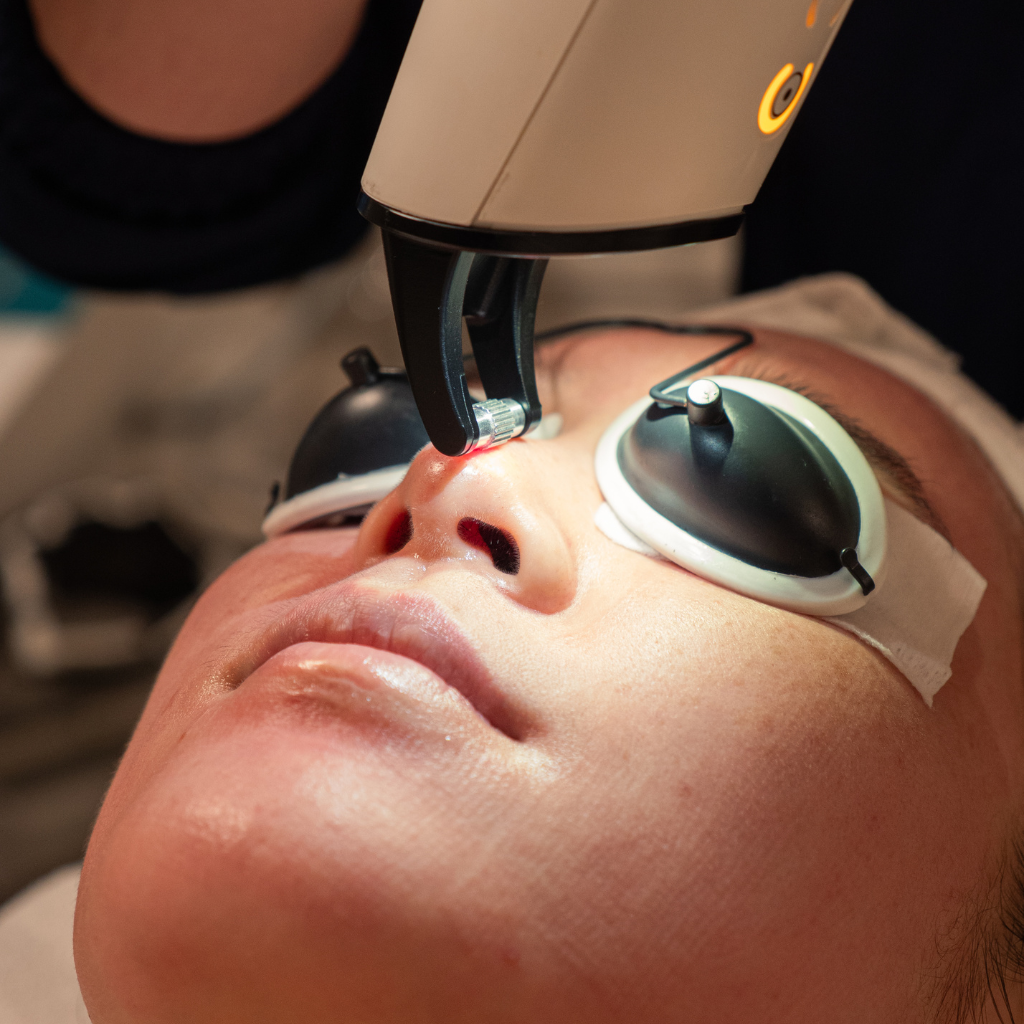
During your session, the Nordlys Frax 1550 handpiece is passed over the treatment area, delivering precisely calibrated pulses of 1550nm infrared laser energy. The laser targets water in your skin cells, creating thousands of microscopic columns of thermal energy reaching up to 800 microns into the dermis. These controlled micro-injuries trigger your body's natural healing response, activating fibroblasts to produce new collagen and elastin. Over the following weeks, your skin remodels itself from within — revealing smoother texture, softer lines, and firmer, more even skin.
Share



Before & After
Acne Scarring and Texture
Before: Visible acne scarring with uneven texture and surface irregularities.
After 4 treatments: Smoother skin texture with reduced visibility of acne scars and a more refined surface.
Photo courtesy of Candela. Results vary by individual.

Before & After
Acne Reduction
Before: Active inflammatory acne with widespread breakouts and visible redness.
After 8 treatments: Visibly clear skin with significantly reduced active acne and calmer tone.
Photo courtesy of Candela. Results vary by individual.

Before & After
Acne and Post-Inflammatory Marks
Before: Active acne breakouts with inflammation and post-inflammatory marks across the cheek.
After 2 treatments: Reduced inflammation, fewer active breakouts, and a smoother overall complexion.
Photo courtesy of Candela. Results vary by individual.
Dos & Don'ts: Before & After Your Laser Treatment
-
Preparing for Your Treatment
✅ Wear SPF 30+ daily for at least 2 weeks prior
✅ Arrive with clean, bare skin — no makeup or actives
✅ Stay well-hydrated in the 48 hours leading up to your session
✅ Let us know about any medications, especially retinoids or antibiotics
🚫 No sun exposure, tanning beds, or self-tanner for 2–4 weeks
🚫 No retinoids, AHAs, or BHAs for 5–7 days before
🚫 No waxing, threading, or chemical peels for 2 weeks prior
🚫 No alcohol or intense workouts the day of your appointment -
After Your Treatment
✅ Apply SPF 30+ every single morning — no exceptions
✅ Use a gentle, fragrance-free cleanser and our recommended moisturizer
✅ Cool compresses if you experience redness or warmth
✅ Sleep on a clean pillowcase and let your skin fully rest
🚫 No direct sun, saunas, steam rooms, or hot showers for 48–72 hours
🚫 No retinoids, acids, or exfoliants until skin has fully settled (5–7 days minimum)
🚫 No makeup on treated skin for at least 24 hours
🚫 No picking, peeling, or pulling at any flaking — let your skin shed naturally
🚫 No pools, hot tubs, or heavy sweating for 5–7 days
The laser starts the process. Your aftercare protects the result. ✨
Q&A
Frequently Asked Questions
What is the Candela Frax Laser
We use Candela Nordlys Frax 1550 for laser treatment. This is a clinically advanced, FDA-cleared non-ablative fractional laser designed for skin resurfacing and rejuvenation. It delivers 1550nm infrared laser energy into the deeper layers of the skin — up to approximately 800 microns — creating thousands of microscopic thermal zones that stimulate collagen and elastin production. Because the laser is "fractional," it treats only 25 to 40 percent of the skin in each pass, leaving surrounding tissue intact to accelerate healing. The result: deeper, more structural skin renewal with significantly less downtime than ablative laser alternatives.
What skin concerns can the Frax Laser treat?
The Frax 1550 is particularly effective for concerns that live in the deeper layers of the skin, including:
- Fine lines and wrinkles
- Uneven skin texture
- Acne scars (rolling, boxcar, and ice-pick)
- Surgical and traumatic scars
- Stretch marks (particularly newer pink or purple stretch marks)
- Sun damage and photoaging
- Deeper pigmentation, including melasma and post-inflammatory hyperpigmentation
- Enlarged pores
- Overall skin laxity and loss of firmness
Because the 1550nm wavelength penetrates deeper than most resurfacing technologies, it's especially well-suited for structural concerns that haven't responded to surface treatments.
How does the treatment work, step by step?
During your session, the Nordlys Frax 1550 handpiece is passed over the treatment area, delivering precisely calibrated pulses of 1550nm infrared laser energy. The laser targets water in your skin cells, creating thousands of microscopic columns of thermal energy reaching up to 800 microns into the dermis. These controlled micro-injuries trigger your body's natural healing response, activating fibroblasts to produce new collagen and elastin. Over the following weeks, your skin remodels itself from within — revealing smoother texture, softer lines, and firmer, more even skin.
How long does a session take?
A full-face Frax laser session typically takes 90 to 120 minutes, including 45 - 60 minutes of numbing time before treatment begins. The actual laser portion takes approximately 20 to 30 minutes depending on the treatment area and passes. It'll end with a cooling mask and a soothing post-treatment serum application to calm the skin and support recovery
Who is Not a Candidate for Laser Skin Resurfacing
The Nordly treatments are not recommended if you:
- Are pregnant or breastfeeding
- Have had recent sun exposure or a spray tan
- Are currently using photo-sensitizing topical medications
- Have taken oral photo-sensitizing medications
- Have an active infection or breakout in the treatment area
- Received Botox® or dermal fillers within the past 2 weeks
- Have used isotretinoin (Accutane®) in the past 6 months
When will I see results?
Initial improvements — smoother texture, brighter tone, fresher skin — are visible within one to two weeks as initial healing completes. The most meaningful results develop progressively over four to twelve weeks as your skin produces new collagen and elastin deep in the dermis. Clients typically notice continued improvement for up to three to six months following a series of treatments, as the collagen remodeling process unfolds.
How many sessions will I need?
Most clients see optimal results from a series of three to five sessions spaced four to six weeks apart. The exact number depends on your concern, skin type, and goals. Deeper acne scarring, stretch marks, or advanced aging typically benefit from the full series, while general rejuvenation may respond well to three sessions. Maintenance treatments every six to twelve months help preserve results long-term. We'll create a personalized plan during your consultation.
Is the Frax laser safe for my skin tone?
The Candela Nordlys Frax 1550 is generally considered safe for a broader range of skin tones than many other laser resurfacing technologies. Because it's non-ablative and fractionated — treating only a portion of the skin per pass — it carries lower risk of pigmentation complications compared to ablative lasers. That said, like all laser treatments, settings must be carefully calibrated to your skin type. For the deepest skin tones (Fitzpatrick V–VI), we'll assess candidacy carefully during consultation and may recommend microneedling or alternative approaches that are equally effective and carry less risk.
How should I prepare for my appointment?
Sun avoidance is critical. Avoid sun exposure, tanning beds, and self-tanner for at least two weeks before treatment — treating tanned or sunburned skin significantly increases the risk of complications. Discontinue retinoids, exfoliating acids, and other active skincare ingredients for five to seven days prior. Arrive with clean, product-free skin, and let us know about any medications (especially photosensitizing ones like certain antibiotics, Accutane, or acne medications), recent injectables, or changes to your skincare routine.
What does recovery look like?
Recovery is meaningful but manageable.
In the first 24 to 48 hours, skin will appear pink to red, similar to a moderate sunburn, with some warmth and mild swelling.
Over days 3 to 5, skin takes on a slightly bronzed or "sandpaper" appearance as the treated zones begin to flake away.
By day 5 to 7, most visible recovery is complete and your skin looks smoother and more refreshed. Makeup can typically be applied 24 to 48 hours after treatment. We recommend scheduling your session at least a week before any major events.
Can I wear makeup after?
Makeup can typically be applied 24 to 48 hours after treatment.
What should I do after treatment?
Treat your skin gently for the first week. Use only the post-treatment products we recommend, and avoid active ingredients like retinol, vitamin C, and exfoliating acids until your skin has fully recovered. Skip workouts, saunas, hot showers, and swimming for 48 to 72 hours to prevent irritation and swelling. Don't pick or scrub at flaking skin — let it shed naturally. Most importantly, wear SPF 30 or higher every day: freshly treated skin is especially vulnerable to sun damage, and unprotected exposure can cause pigmentation issues and compromise your results. We'll send you home with detailed aftercare guidance.
What does "non-ablative" mean, and why does it matter?
Non-ablative means the laser energy reaches the deeper layers of your skin without removing the surface. Traditional ablative lasers (like CO₂) resurface by vaporizing the top layer of skin, delivering dramatic results but requiring one to two weeks of recovery. The Nordlys Frax 1550 works beneath the surface — targeting water in deeper skin cells to create controlled thermal zones that trigger collagen renewal, while leaving your outer skin intact. This means meaningful results with a fraction of the downtime, making it ideal for clients who want real improvement without extended recovery.
Is Candela Frax Laser worth it compared to other resurfacing options?
Frax 1550 sits in a "sweet spot" between surface-level treatments (facials, IPL) and aggressive resurfacing (ablative CO₂ laser). It delivers deep, structural renewal with a fraction of the downtime required by ablative alternatives, making it one of the most practical and effective laser resurfacing options available.
Because it's backed by Candela — one of the most trusted names in medical aesthetic technology — clients can trust that the technology is safe, clinically validated, and consistently effective.
What's the difference between Frax and Fraxel Laser?
The names are confusingly similar, but they're made by different manufacturers. Fraxel is a fractional laser brand by Solta Medical, on the market since the early 2000s and widely known. Frax is Candela's fractional laser technology, integrated into the Nordlys platform we use at SleekCare.
Both use the same core principle — non-ablative fractional laser energy that creates microscopic columns of treatment in the skin to stimulate collagen and elastin renewal. Both treat similar concerns (fine lines, acne scars, texture, pigmentation) with minimal downtime.
Does it hurt?
Most clients experience mild-to-moderate discomfort during treatment, typically described as a warm, prickling sensation with brief moments of heat. A topical numbing cream is applied before treatment to significantly reduce sensation, and the Nordlys system includes integrated skin cooling for added comfort. Most clients find the treatment well-tolerated, though more sensitive areas (around the nose, mouth, and forehead) may feel slightly more intense. We'll communicate with you throughout the session and adjust accordingly.
Can the Frax 1550 be combined with other treatments?
Yes, strategically. Many clients use Frax 1550 as the deeper resurfacing component of a comprehensive plan, combined with IPL for pigmentation and redness, or Candela Exceed microneedling for targeted textural concerns.
Between laser sessions, HydraFacials are a great way to maintain hydration and glow without interfering with collagen-building. We don't recommend combining multiple resurfacing treatments in the same visit — your esthetician will sequence your care thoughtfully to maximize results without overloading your skin.
Why does my skin look bronzed or like sandpaper after treatment?
This is normal, expected, and actually a sign the treatment is working. The Frax 1550 creates microscopic columns of treated tissue in the dermis — as these columns heal and push toward the surface, they create a temporarily textured, slightly bronzed appearance on days 3 to 5. This is called "MEND" (Microscopic Epidermal Necrotic Debris) and it's the treated skin being replaced by fresh new skin beneath. It flakes away naturally over the following days, revealing smoother, brighter skin underneath. Don't scrub, pick, or exfoliate — just let your skin do its work.
Can I get Frax Laser while pregnant or breastfeeding?
We don't perform Frax 1550 treatments during pregnancy. While there's no definitive evidence of harm, the clinical data is limited and we err on the side of caution — especially because pregnancy-related hormonal changes can affect pigmentation unpredictably. Treatment is typically postponed until after breastfeeding as well. HydraFacials and gentler treatments are a great alternative during this period.

Still Not Sure If Laser is Right For You?
Schedule a complimentary consultation with our expert providers to discuss your needs.